Line Art Camping Set
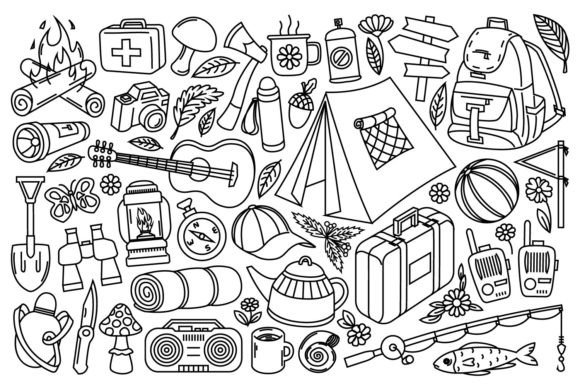
When I first opened the Line Art Camping Set, I was looking at a collection of camping doodle illustrations with black thin line work. The hand-drawn feel immediately stood out. There is a looseness to the line quality that feels approachable, not stiff. As someone who has tested hundreds of embroidery files for real projects, I can tell you that the mood here is casual, warm, and slightly nostalgic. These are not hyper-detailed technical drawings. They are the kind of sketches you might make in a travel journal after a long day by the fire. That personality matters when you are deciding whether a design will connect with customers or just sit unused in a digital folder.
This set belongs to the Illustrations category and is listed under Graphics, which is accurate. The line art style is clean enough for embroidery but still carries that hand-drawn imperfection that makes custom apparel feel personal. If you are an Etsy seller or a small shop owner looking for summer-themed designs, this collection has a natural hook. Camping, travel, vacation, picnic, and tour drawings are popular across multiple product types. The question is not whether the theme works. It is whether this specific set performs well when stitched out.
First Impressions of the Line Art Camping Set
The overall look is minimalist. The black thin line approach means the design relies on contour and shape rather than shading or heavy fill. That is a smart choice for embroidery because it keeps the stitch count manageable and the visual clarity high. The collection includes elements like tents, trees, campfires, mountains, a camper van, and small travel motifs. Each piece feels like a standalone doodle, but they also work together as a composition. That flexibility is useful whether you are decorating a single tote bag or building a themed product line.
What I appreciate most is the restraint. There is no clutter. The drawings are simple enough that they read clearly at small sizes, but they still have enough character to look intentional on a larger surface. The hand-drawn quality gives them a handmade feel, which is exactly what buyers look for when they purchase personalized gifts or boutique merchandise. This is not a design that tries to impress with technical complexity. It impresses by being easy to like and easy to use.
Real Use Case: Custom Tote Bags for a Summer Market
I tested this set on a run of custom tote bags for a small craft business that sells at local summer markets. The client wanted something that felt outdoorsy but not rugged. They needed a design that would appeal to people who camp occasionally and like the idea of nature more than the reality of sleeping on the ground. The Line Art Camping Set fit that brief perfectly. I stitched a tent and mountain motif onto a natural canvas tote using a medium-weight cutaway stabilizer. The thin black line stitched cleanly at a height of about four inches. The satin stitch on the tent outline held its shape well, and the running stitch details on the mountain peaks stayed crisp.
The finished product looked like a simple, thoughtful illustration. Customers at the market responded well. Several people commented that the design felt like a drawing they would frame. That is the kind of reaction you want when you are selling handmade products. It tells you the design has emotional resonance, not just visual appeal. The tote bags sold out before the end of the weekend, and the client ordered more for the next market. That is a real outcome from a well-chosen embroidery file.
How the Line Art Camping Set Performs on Different Products
I tested this design on several surfaces to see where it shines and where it struggles. On custom apparel like a lightweight sweatshirt, the line art stitched smoothly. The fabric was a soft cotton blend, and I used a tearaway stabilizer with a light layer of spray adhesive. The design did not distort or pucker. The thin line style actually helped the embroidery sit flat against the fabric because there was no heavy fill stitch pulling the material. On a t-shirt, the result was similar. The design works well for casual apparel because it does not feel overwrought.
On a cap, I had to be more careful. The curved surface of a hat requires lower stitch density and simpler shapes. The smaller motifs in the set, like the single tree or the campfire, worked well on the front panel of a cap. The larger compositions would be too wide. On a patch, the design performed beautifully. The thin line work translated into a clean embroidered patch that looked like a vintage travel badge. That is a strong product opportunity for Etsy sellers who sell iron-on patches or sew-on patches for jackets and backpacks.
On a baby onesie or baby blanket, the scale needs to be reduced significantly. The smaller doodles, like the tiny tent or the little star, work at a smaller hoop size. The larger motifs lose detail when shrunk too much. I would recommend testing a scaled-down version on scrap fabric first to make sure the satin stitches still read clearly. On a pillow cover or kitchen towel, the design works well at medium scale. The camping theme is a natural fit for home decor items that lean rustic or outdoorsy.
Where to Use This Design Carefully
Not every product is a good match for the Line Art Camping Set. Here is where I would be cautious:
- Small hoop sizes: If you are working with a 4x4 hoop, you are limited to the smallest motifs. The tent with the surrounding trees will not fit without losing detail. Stick to the single-element doodles for small hoops.
- Dark fabrics: The black thin line design relies on contrast. On dark fabric, the black thread will disappear unless you switch to a lighter thread color. White or bright yellow could work, but the hand-drawn feel changes with a different color palette. Test this before committing to a production run.
- Stretchy or textured fabrics: The running stitch details in this design can distort on stretchy knits if the stabilizer is not strong enough. Use a cutaway stabilizer for anything with spandex or high stretch. On textured fabrics like fleece or terry, the thin lines may sink into the texture and lose definition. A higher stitch density would help, but that is not built into this file.
- Curved surfaces like caps: As I mentioned, the larger compositions do not fit well on caps. Pick the smaller motifs and test them at the actual hoop position before stitching a full run.
- Products that need frequent washing: The thin satin stitches and running stitches are durable enough for occasional washing, but I would not recommend this design for items that will be washed weekly, like kitchen towels or baby bibs, without a very strong stabilizer and careful thread choice. Polyester thread holds up better than rayon in those conditions.
Visual Appeal, Product Value, and Customer Trust
The Line Art Camping Set creates a visual identity that is approachable and modern. It does not look like a stock clip art that was converted into an embroidery file. It looks like an original illustration. That perception translates directly into product value. Customers are willing to pay more for something that feels curated and handmade. When you stitch this design onto a tote bag or a sweatshirt, the finished product carries a boutique quality. That builds trust with your buyers. They see that you put thought into the design selection, not just the stitching.
For brand consistency, this set works well if you are building a summer-themed product line. The black thin line style is cohesive across all the motifs. You can use the tent on a tote bag, the camper van on a t-shirt, and the campfire on a patch, and they all feel like they belong together. That is hard to achieve with mismatched designs from different sources. For giftability, the camping theme is broadly appealing. It works for birthdays, anniversaries, graduation gifts, and holiday presents. The design does not feel seasonal in a narrow way. It feels like a lifestyle illustration that people will enjoy year-round.
Practical Embroidery Designer Notes
Before you use the Line Art Camping Set in production, here are the steps I recommend based on my own testing:
- Test on scrap fabric first. Stitch out the design on a material similar to your final product. Check the stitch quality, the thread tension, and the overall clarity. Do not skip this step even if you are confident.
- Check thread color contrast. The design is designed for black line art, but you are not limited to black. Test it in dark green, navy, or burnt orange to see how the mood changes. Make sure the thread color stands out against your fabric.
- Review stitch density. The thin line style keeps density low, which is good for most fabrics. But if you are working with very thin or delicate fabric, the needle holes may still show. Use a water-soluble stabilizer on top for delicate materials.
- Confirm hoop size. Measure the largest motif in the set and compare it to your hoop capacity. If you are using a small hoop, pick the smaller elements. Do not try to squeeze a large composition into a tight space.
- Inspect small details. Look at the fine lines in the design. If any detail is thinner than about 0.5 mm when stitched, it may not hold up well. Consider simplifying or removing those details if they cause problems.
- Test in black and white mockups. Before stitching, create a black and white printout of the design at the actual stitch size. This helps you see the layout and spacing without wasting thread or fabric.
- Compare light and dark fabric backgrounds. The design reads differently on white, cream, light gray, and dark navy. Test at least two fabric colors to see which one enhances the design best.
- Use proper stabilizer. For most cotton and cotton-blend fabrics, a medium-weight cutaway stabilizer is a safe choice. For stretchy fabrics, use a cutaway with good recovery. For stable fabrics like canvas, a tearaway may work.
- Check licensing before selling. This design is listed as Illustrations and Graphics. Confirm the commercial use rights for the specific file you purchased. Some licenses allow unlimited commercial use, while others restrict the number of finished products you can sell. Know the terms before you list anything on Etsy or at a craft fair.
- Test both personal and commercial projects. Stitch one version for yourself or as a gift before you commit to a production run. This gives you a low-pressure chance to work out any issues with the embroidery file.
Final Thoughts on the Line Art Camping Set
This is a design that rewards careful preparation. The Line Art Camping Set is not a heavy, dense embroidery file that will fight your machine. It is a light, airy illustration that relies on shape and line quality. That makes it versatile, but it also means the details matter. A well-chosen thread color, a stable fabric, and the right hoop size will make this design look like a premium product. Rushing through the setup will make it look unfinished.
For machine embroidery design users who work with custom apparel, handmade products, and personalized gifts, this set offers a strong summer theme that can carry across multiple product categories. The embroidery file itself is clean and well-structured. The applique design potential is limited because the line art is mostly satin and running stitch, but that is not a weakness. It is a stylistic choice that works for the intended look.
If you are an Etsy seller or a small shop product creator looking for a camping-themed design that does not feel generic, this is worth your time. Test it, adjust it, and put it on products that match its casual, hand-drawn personality. The digital embroidery file is ready to go, but the quality of the finished product depends on how well you match the design to the fabric and the product type. That is true for any embroidery project. The Line Art Camping Set gives you a good foundation. The rest is up to your skill as a maker.