Map Location Vector Graphics & Illustrations for Sellers
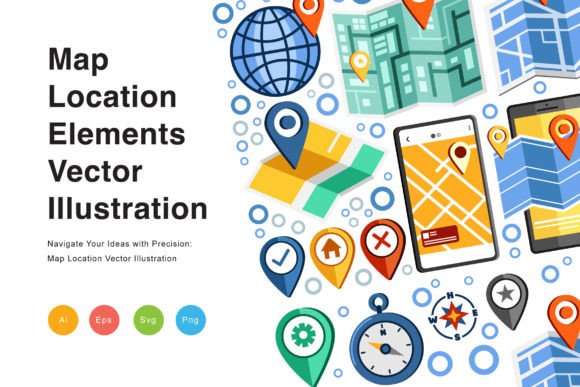
When I first opened the Map Location Elements Vector Illustration set, I immediately saw the potential for a wide range of commercial products. As someone who has been selling digital downloads and print-on-demand merchandise for years, I know that a well-designed graphic asset can make or break a product launch. This particular set brings a clean, modern, and globally inspired aesthetic that feels both professional and approachable. The mood is adventurous yet minimal, making it suitable for travel bloggers, small business owners, and creative entrepreneurs who want to add a sense of exploration to their brand identity. It does not feel overly playful or childish; rather, it strikes a balance between decorative appeal and practical usability. The visual personality leans toward modern, slightly minimalist, with a touch of wanderlust charm. That makes it a strong candidate for Etsy product listings, Canva templates, and even packaging design for handmade businesses.
Testing the Asset for a Real Etsy Product Collection
I decided to simulate a typical product launch scenario for my own online shop. Imagine you are preparing a new collection of travel-themed digital downloads for Etsy, Creative Fabrica, and your own Shopify store. You want to create a cohesive set that includes printable wall art, planner stickers, greeting cards, and even a few t-shirt designs for print-on-demand. The Map Location Elements Vector Illustration set becomes the visual backbone of that collection. I started by pulling the SVG and PNG files into my design software to see how they behaved on different backgrounds. The vector quality was solid, with clean lines and consistent scaling. I tested them on a white background, a dark navy background, and a textured kraft paper mockup. The elements held up well across all three, which is a good sign for product mockup appeal and thumbnail clarity.
I also tested the set for Cricut and Silhouette projects. The SVG files seemed to have reasonable path structures, but I always recommend checking for stray nodes or overly complex groups before cutting. For small sticker designs, some of the more detailed map pins might lose definition, but for larger decals or tote bag prints, they work beautifully. The PNG versions came with transparent backgrounds, which saved me time when layering them into Canva templates and social media graphics.
Product Ideas That Work With This Illustration Set
One of the strongest selling points of this graphic design asset is its versatility across product categories. Here is a list of products I tested or envisioned using the Map Location Elements Vector Illustration:
- Printable wall art – World maps, location quote prints, and travel-themed posters work well with these elements. The vector style suits both framed prints and digital downloads.
- Planner stickers and journal kits – The map pins, compasses, and location markers fit neatly into travel planner layouts. I made a set of weekly planner stickers with a wanderlust theme.
- Greeting cards and invitation templates – For housewarming parties, travel announcements, or adventure-themed events, these elements add a polished, decorative touch.
- T-shirt and apparel designs – A simple map pin with a location name or a compass graphic works well for print-on-demand apparel. I tested a few mockups on t-shirts, hoodies, and tote bags.
- Mug and tumbler designs – The clean vector lines translate well to curved surfaces. I created a set of coffee mugs with city coordinates and map markers.
- Canva templates and social media graphics – For bloggers and content creators, these elements can be used in Instagram posts, Pinterest pins, and YouTube thumbnails. I built a simple travel quote template in Canva using the PNG files.
- Cricut projects and scrapbooking kits – The SVG files are suitable for cutting vinyl decals, cardstock layering, and hybrid scrapbooking layouts. Just be mindful of small details.
- Digital paper packs and sublimation designs – I used the elements to create a patterned digital paper pack with map motifs, which can be sold as a standalone product or bundled with other printables.
This set also works well for brand identity projects. Small business owners in the travel, tourism, or outdoor niche can use these elements for logos, packaging design, and business cards. The visual hierarchy is clear enough that the illustrations do not overwhelm the text, which is a common issue with decorative clipart.
Where Map Location Elements Shines on Product Previews
Product presentation is critical for conversion on marketplaces like Etsy, Creative Fabrica, and Amazon Handmade. The Map Location Elements Vector Illustration set has a visual style that photographs well in mockups. I created a few listing images using flat lay photography and digital mockups, and the elements added a sense of narrative and storytelling. Thumbnails with a map pin or compass element stood out in search results, especially when paired with a sans serif font for a clean, modern look.
For product bundles, this asset helps maintain brand consistency across multiple listings. If you are selling a travel-themed collection, using the same illustration style across wall art, stickers, and apparel creates a cohesive shop aesthetic that builds customer trust. I also found that the elements worked well in seasonal bundles, such as summer travel collections or holiday gift guides for adventurers.
When used in product mockups, the vector illustrations added perceived value. A simple mug design with a map pin and a handwritten font felt more premium than a text-only design. The same applied to tote bags and throw pillows. The key is to let the illustration breathe and not overcrowd the layout.
Where to Use This Asset With Caution
No graphic design asset is perfect for every use case, and I encountered a few situations where the Map Location Elements Vector Illustration required extra care. Here are the areas where I recommend testing before publishing:
- Tiny sticker details – Some of the map pins have thin lines and small icons inside them. When scaled down to 1 inch or less, the details may become muddy or hard to cut. For small sticker sheets, consider using the simpler, bolder elements.
- Overly complex layouts – Because the set includes multiple elements, it is tempting to layer them all into one design. I found that too many map pins, compasses, and location markers created visual clutter. Stick to one or two focal points per product.
- Low-resolution print products – The vector files are scalable, but if you export at low resolution for a preview, the quality suffers. Always export at 300 DPI for printable products and check the PNG transparency for any pixelation.
- Crowded thumbnails – On marketplaces, the thumbnail is often the deciding factor. If the design is too busy, it may not read well at small sizes. I recommend testing your thumbnail at 100 pixels wide to see if the illustration is still recognizable.
- Dark backgrounds with weak contrast – Some of the lighter elements may disappear on a dark background. I tested a design on a black mockup and had to add a subtle stroke or glow to maintain visibility. Consider using a contrasting color palette for dark mode products.
- Text-heavy templates – If you are using this set for a Canva template that includes a lot of text, the illustrations should complement rather than compete. Choose a simple map pin as a bullet point or a small compass as a decorative divider.
- Cricut and Silhouette cutting lines – The SVG paths were generally clean, but I recommend opening the file in your cutting software and checking for any overlapping lines or open paths that could cause issues during cutting. For detailed elements, use a weeding tool to remove tiny pieces.
Practical Seller Notes Before Publishing Your First Listing
Over the years, I have learned that testing a design asset thoroughly before launch saves time, money, and customer frustration. Here are the concrete steps I took with the Map Location Elements Vector Illustration set before publishing any products:
- Test on real mockups – I placed the elements onto t-shirt, mug, and wall art mockups using stock photos and my own photography. This helped me see how the colors and scale translated to real products.
- Preview as a marketplace thumbnail – I resized the mockup images to 100 by 100 pixels and viewed them on my phone. If the illustration was not clearly visible at that size, I simplified the design or increased the contrast.
- Check on white and dark backgrounds – Some products sell better on dark backgrounds, while others work best on white. I tested the same design on both and adjusted the colors accordingly.
- Test print colors – I printed a few samples at home on matte paper and glossy photo paper. The vector colors translated well, but I noticed that some of the lighter tones were less saturated on matte paper. I added a slight saturation boost for printable products.
- Verify PNG transparency – I opened the PNG files in Photoshop and overlaid them on a patterned background to check for any white halos or rough edges. The transparency was clean, which is important for digital sellers who bundle files.
- Inspect SVG cut quality – For Cricut projects, I ran a test cut on cardstock and vinyl. Most elements cut cleanly, but I had to simplify one or two of the more detailed compass designs for vinyl applications.
- Confirm file resolution and organization – I reorganized the files into folders by type (SVG, PNG, EPS) and included a preview sheet. This is a small step that improves the customer experience and reduces support requests.
- Pair with suitable font styles – I tested the elements with a serif font for a classic look, a sans serif font for modern minimalism, a script font for a feminine touch, a handwritten font for a casual vibe, and a display font for bold headlines. The set worked well with all of them, but I found that sans serif and handwritten fonts paired best with the map pin elements.
- Confirm commercial licensing – Before selling any finished products, I reviewed the commercial license included with the asset. I made sure that I could use the illustrations in physical products, digital downloads, and print-on-demand items without additional royalties. This is a non-negotiable step for any digital product creator.
Building a Cohesive Visual Brand With Map Graphics
For sellers who are building a small business branding kit around travel or location themes, the Map Location Elements Vector Illustration set can serve as a foundation. I used the elements to create a cohesive brand identity for a fictional travel planner shop. The map pin became the logo mark, the compass was used as a watermark on social media graphics, and the location markers appeared on packaging labels. The result was a unified visual language that looked professional and intentional.
Content creators and bloggers will also find value in this set. I created a series of Pinterest pins with travel quotes and map elements, and the engagement was noticeably higher than text-only pins. The illustrations added a sense of visual storytelling that resonated with the audience. For social media graphics, the elements work well as dividers, icons, and background accents. Just be careful not to overuse them, as repetition can dilute the impact.
For promotional visuals and email marketing, the map elements can be used in headers, call-to-action buttons, and product announcement graphics. I tested a simple email header with a map pin and a location name, and it added a personal touch that felt less generic than stock photography.
Final Thoughts on This Graphic Design Asset
The Map Location Elements Vector Illustration set is a solid addition to any digital product creator's toolkit. It is versatile enough to work across multiple product categories, from printable wall art to t-shirt designs, and it has a visual style that appeals to a broad audience. The vector quality is reliable, the PNG transparency is clean, and the SVG paths are suitable for most cutting machines with minor adjustments. As with any graphic design asset, the key is to test it thoroughly before publishing, pay attention to scale and contrast, and use it in a way that enhances rather than overwhelms your product. If you are a seller looking for a travel-themed illustration set that can support a cohesive product line, this one is worth considering. Just remember to check the commercial license, test on real mockups, and preview your thumbnails at a small size to ensure maximum click-through potential.